Home page
 Welcome to the South African Info Wiki !
South Africa offers an unparalleled travel experience. With its diverse landscapes, rich culture, and warm hospitality, this African gem captivates visitors from around the world. From the breathtaking beauty of the Drakensberg Mountains to the thrilling wildlife encounters in Kruger National Park, there's something for everyone. Explore vibrant cities like Cape Town and Johannesburg, or unwind on pristine beaches along the Garden Route. Immerse yourself in the country's fascinating history and vibrant culture, while indulging in world-class cuisine and fine wines. South Africa truly has it all.

South Africa beckons with an irresistible blend of everything you dream of in a holiday. Imagine vast savannahs teeming with incredible wildlife, where lions roar and elephants trumpet. Immerse yourself in the rich history and vibrant culture of bustling cities. Marvel at the natural wonders, from the iconic silhouette of Table Mountain to the breathtaking beauty of the Garden Route.
Year-round sunshine and the warm hospitality of the South African people complete the picture. While South Africa navigates a new political landscape, the warmth of its welcome remains constant.

Have you ever been forced to buy a return plane ticket when you didn't need one?
Well, DUMMY TICKET has all the solutions for your airline ticket and visa problems.
What is a Dummy ticket?
A dummy ticket looks typically like a regular airline ticket and has a valid PNR/ booking code or booking reference number. They can be verified on the airlines websites if checked using the "Manage my booking" tool or "My trips" section found on many airline websites. A dummy ticket is also known as a flight reservation or itinerary.
What is a Dummy ticket used for?
The main use of a dummy ticket is for visa applications. Many embassies, consulates or visa application centers like VFS or BLS ask for a flight reservation during the visa application process. Dummy tickets are also used for proof of return to show at the immigration while traveling. Other uses of a dummy ticket are as below: *
- Visa applications
- Proof of return or onward travel
- Expedite passport renewal
- Show company HR/ Manager for leave and other purposes
- Exit visa procedures in many GCC countries
- Rent a car at airport locations
Click on the advert below for your DUMMY TICKET. From only $19 USD.
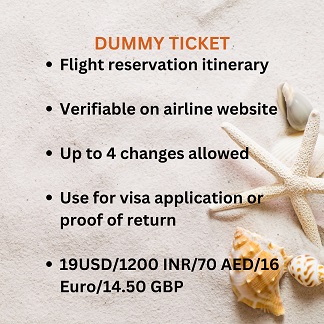

Figure 8.3: The Efficiency Paradox
Staff vs. Performance
Examining the radical transformation in operational efficiency
🧠 Neuralink: Key Data & Projections
Comprehensive Analysis for Investors, Engineers & Visionaries
⚡ BCI Technology Comparison: Neuralink vs. Competition
| Metric | Neuralink | Synchron | Blackrock | Paradromics | Precision |
|---|---|---|---|---|---|
| Electrode Count | 1,024+ | 16 | 100 | 10,000+ (dev) | 1,024 |
| Wireless | ✓ Yes | ✓ Yes | ✗ No | Planned | ✓ Yes |
| Invasiveness | Medium | Low | High | High | Low |
| Human Trials | ✓ 2 patients | ✓ 4+ patients | ✓ 50+ patients | ✗ Pre-trial | ✓ Temporary |
| FDA Status | Approved (PRIME) | Approved | Cleared | Pre-trial | Early trials |
| Surgical Robot | ✓ R1 (automated) | ✗ Catheter | ✗ Manual | ✗ Manual | ✗ Manual |
| Valuation | $8-10B | $1B+ | Private | Private | Private |
| Funding | $680M+ | $145M | N/A | $100M+ | $53M |
📊 Patient Performance Metrics
⚙️ N1 Implant Specifications
💰 Total Addressable Market (TAM) Analysis
Medical Applications (Conservative)
Augmentation Market (Speculative - 2035+)
📈 Revenue Projections (2025-2040)
🗓️ Neuralink Development Timeline
Founded
Musk invests $100M, recruits 8 co-founders from neuroscience and engineering
Animal Testing Begins
Rats, pigs demonstrate basic functionality. Thread technology developed.
Gertrude the Pig Demo
First public demonstration of wireless N1 implant recording neural activity
Pager Plays Pong
Monkey controls video game with mind via 1,000+ electrode array
FDA Approval (PRIME Study)
Breakthrough Device designation granted for human trials in paralysis patients
First Human Implant
Noland Arbaugh receives N1 implant, begins cursor control and typing
Second Patient
Alex receives improved implant with resolved thread anchoring
Blindsight FDA Approval
Breakthrough Device designation for vision restoration system
PRIME Study Completion
Target: 10 patients implanted, 12-month safety data, first Blindsight patient
Clinical Expansion
50-100 patients, multiple indications, manufacturing scaled to 1,000+ devices/year
FDA Approval & Commercial Launch
PMA submission, approval for quadriplegia indication, limited commercial sales begin
Medical Market Growth
10,000+ patients, multiple approved indications, $500M-2B revenue
Augmentation Era Begins
First healthy-person trials, cognitive enhancement demonstrations, regulatory debates intensify
🚀 Communication Bandwidth: Human vs. BCI vs. Biological
💎 Valuation Scenarios (2035 Projected)
Transportation in South Africa
South Africa offers a variety of transportation options to suit different budgets and travel styles. For those seeking comfort and speed, domestic flights connect major cities. Car rental provides flexibility to explore at your own pace, while buses offer a budget-friendly alternative for longer distances. Train travel offers a scenic and relaxing experience, with options ranging from budget-friendly to luxurious. Taxis and ride-hailing services are readily available in urban areas. However, it's essential to exercise caution when using public transportation, especially in unfamiliar surroundings.
Ultimately, the best mode of transportation depends on your itinerary, budget, and desired travel experience.
Airlines
FlySafair (pronounced: "fly-saf-air") began operations in October 2014, but the company behind the airline, Safair, has been in operation for over 50 years.
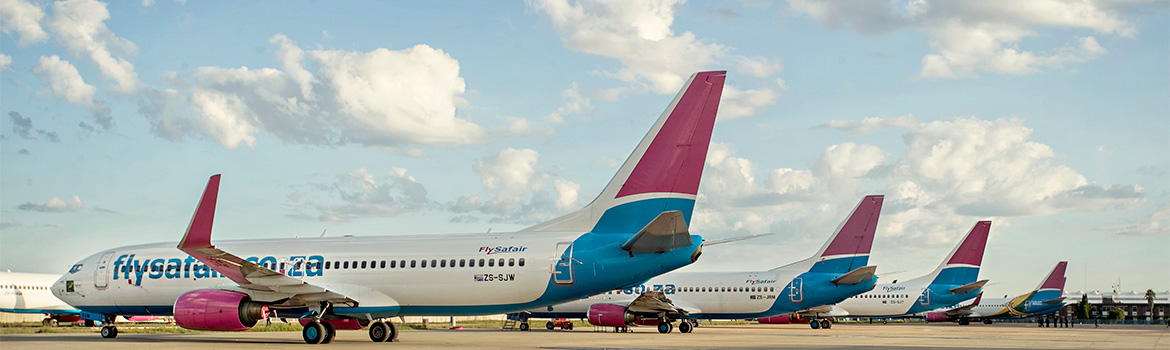
FlySafair website
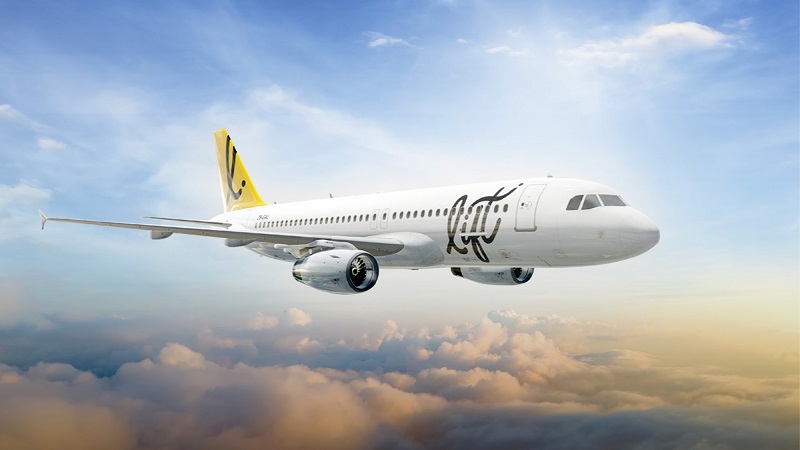
Lift Airlines
LIFT is a relatively new South African airline that has quickly gained popularity for its flexible booking options and comfortable flights. It offers domestic routes within South Africa, connecting major cities and popular tourist destinations.
Airlink
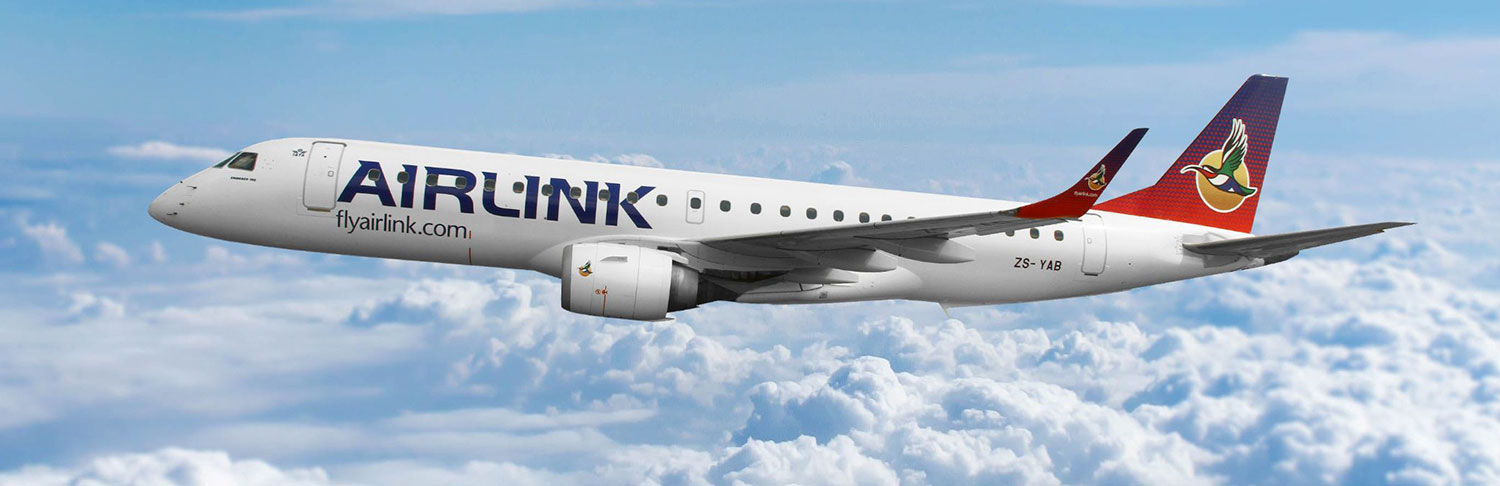
Airlink, (previously known as South African Airlink) is a regional airline based in Johannesburg, South Africa. Its main business is to provide services between smaller, under-served towns and larger hub airports. It has since expanded to offer flights on larger, mainline routes. The airline has a network of more than 60 routes to over 45 destinations in Southern Africa. In January 2021, it became the second-largest carrier within Africa by number of flights, and third-largest by number of seats.
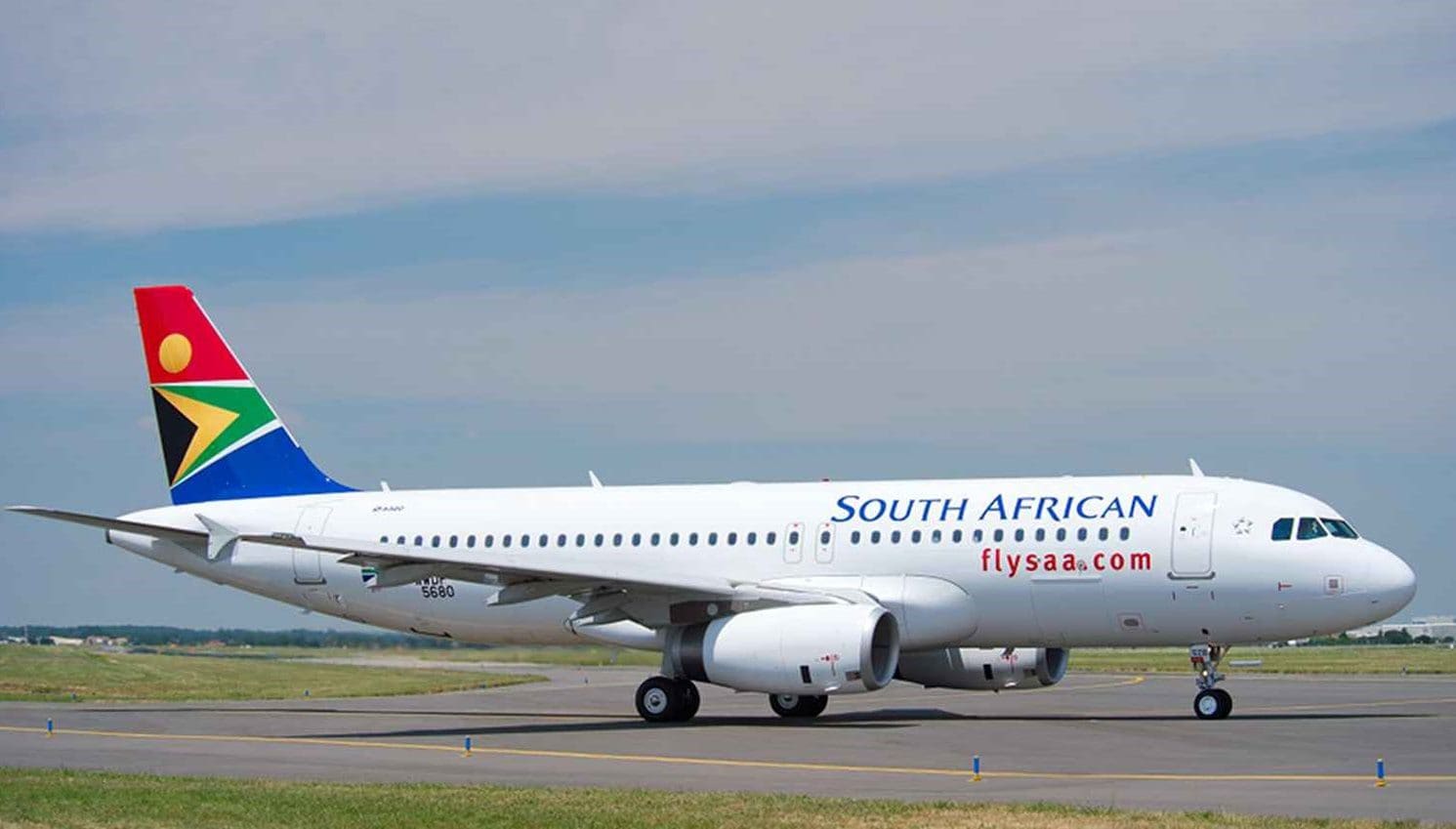
South Africa Airways (SAA)
Once the pride of South African airspace, SAA unfortunately was decimated by corruption and mismanagement and now only have a few aircraft flying.
Trains
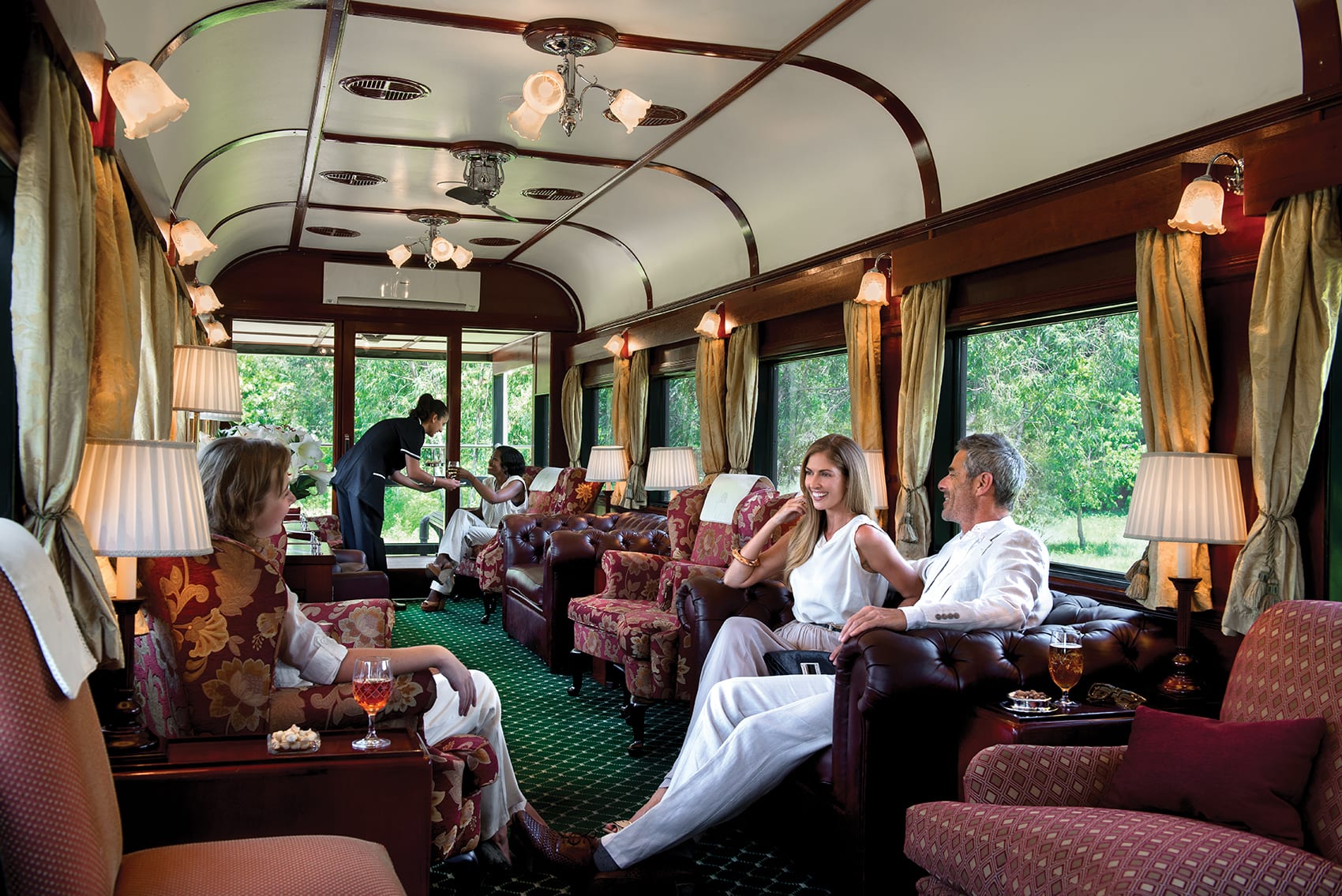
South Africa has, for the last 30 years, been deteriorating due to corrupt, inexperienced and unskilled politicians. As of July 2024, we have a new (GNU) government and are on the right track (excuse the pun) to once again make train travel a popular form of transport. As a tourist, I would be hesitant to travel by regular train in South Africa, BUT, there are 2 wonderful luxury trains available to tourists - Rovos Rail and The Blue Train.
Bus
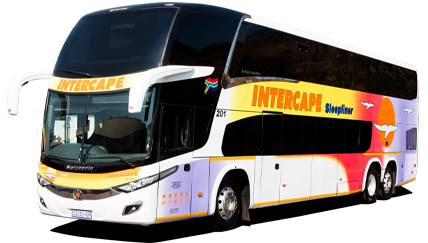
South Africa has a selection of long distance bus companies. The buses are generally not as comfortable as in other parts of the world, but they are affordable.
Baz Bus
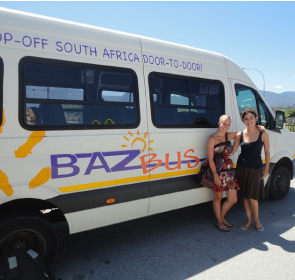
Bazbus has become THE way to travel around South Africa in a safe, flexible, and fun way!
A South African institution since 1995, Bazbus covers the major tourist destinations, but our drivers also know the hidden gems, the stops between the stops that tourists would never find. Best option for backpackers.
Taxis
South Africa has numerous e-hailing services with BOLT and UBER being among the most popular.

For a more in-depth look at taxi options click here.
Minivans (black taxis)
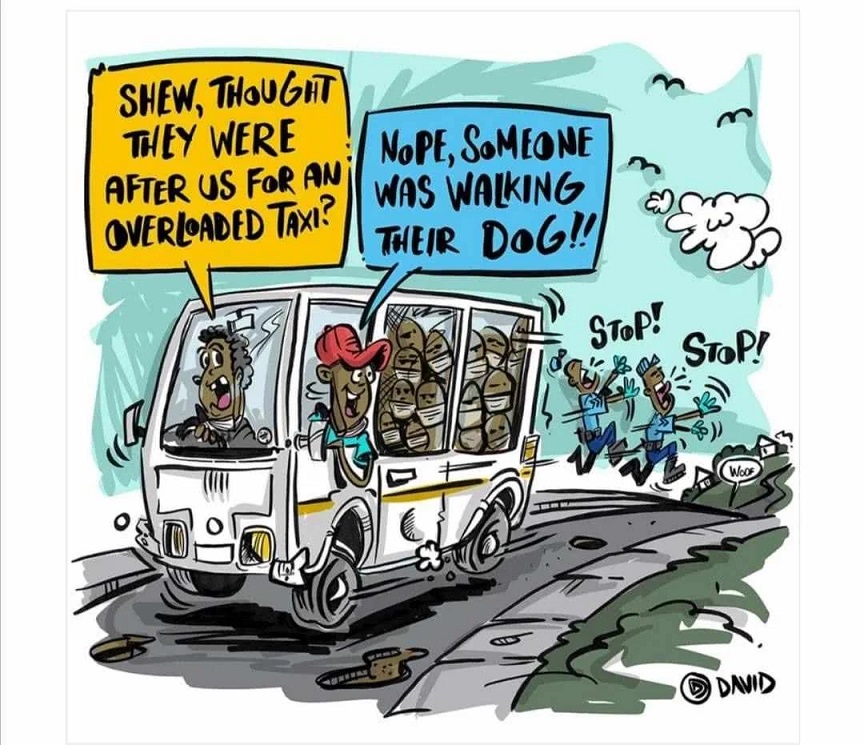
In the 1960s, the apartheid government forced black South Africans to move out of the cities into far-flung townships many kilometres away from business districts. To facilitate the movement of people from the cities to work, food, and services; the minibus taxi industry was born out of a need for public transport, which was not serviced by buses or rail.
Although black taxis are everywhere and are very cheap, I would not recommend taking one as a tourist - not for crime reasons, but for comfort reasons. They tend to exceed the legal passenger limit and are infamous for recklessness.